

Table of Contents
Choosing the right stranding equipment is important for cable manufacturers because the machine affects conductor structure, production efficiency, tension control, and final cable quality. Tubular and rigid stranding machines are both widely used, but they are designed around different production requirements.
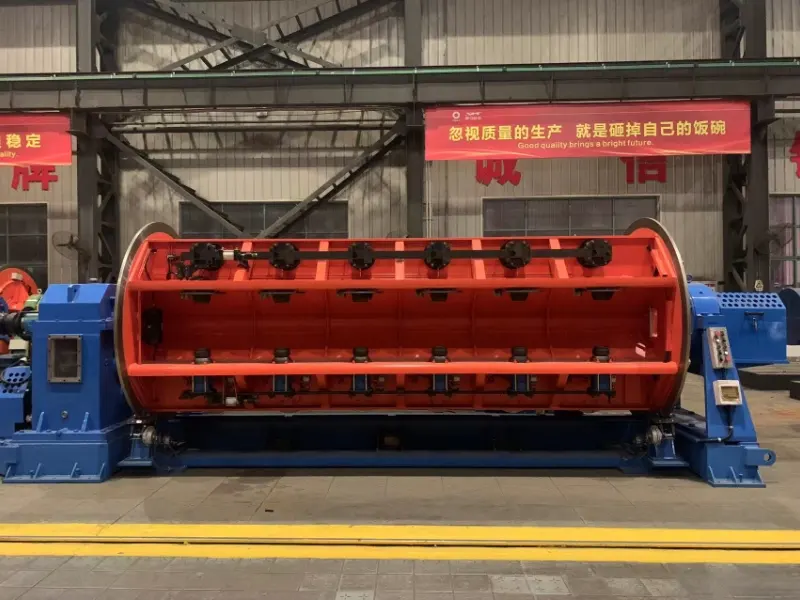
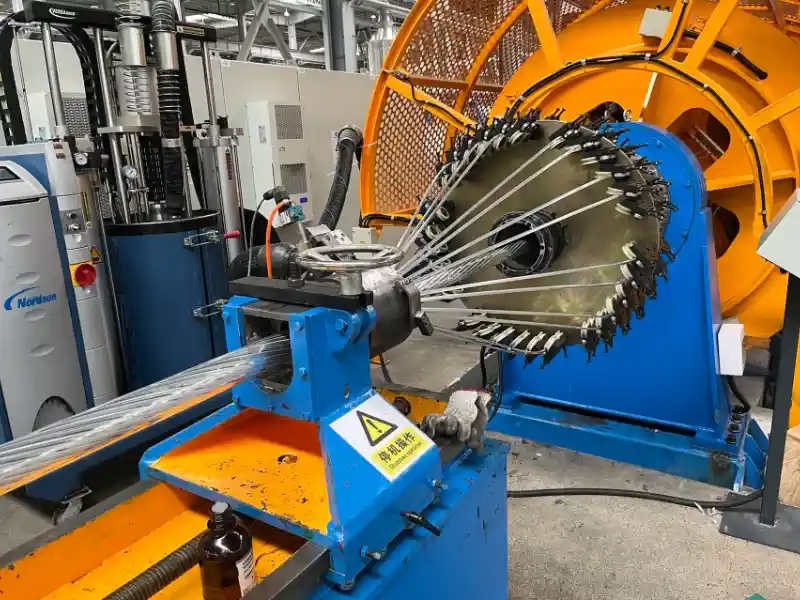
Hfsmarter has specialized in cable machinery since 1985 and offers a wide range of equipment for wire and cable production. Its stranding machine portfolio includes both tubular and rigid solutions, allowing manufacturers to select equipment according to conductor type, stranding method, and production needs.
Tubular Stranding Machine: When Is It a Good Choice?
A tubular stranding machine is a practical option for applications that require back-twist stranding and stable processing of multiple individual wires.
For example, the JGG Tubular Stranding Machine uses 100% back twist movement and is designed for stranding 7-, 12-, and 19-wire round or sector-shaped copper and aluminum conductors, as well as steel wires. It can also be used for steel rope and OPGW cable stranding.
The machine uses band-type brakes for wire tension control, with Germany hysteresis brakes available as an option. Its main rotor, pulling capstan, and take-up unit are independently driven, while the HMI+PLC system controls stranding pitch, wire tension, automatic tension compensation, and synchronization with the take-up unit.
This makes a tubular design suitable when the production process requires back-twist movement, controlled wire tension, and efficient processing of specific conductor structures.
Rigid Stranding Machine: When Does It Make More Sense?
A rigid stranding machine follows a different operating principle. Instead of back-twist movement, a rigid machine uses a non-back-twist structure, making it suitable for conductor and cable applications where this stranding method is preferred.
The JLK Rigid Stranding Machine is designed for copper, round aluminum wire armoring, pre-twist sector conductors, and steel wire armoring cables. It can also be used for soft or semi-hard aluminum trapezoid wire, carbon fiber reinforced cores, and expanded diameter conductors.
The machine uses independently motor-driven cages with electrical synchronization. Its control system can manage parameters such as pitch, stranding direction, automatic tension compensation, and synchronization between the pulling capstan and take-up unit.
For manufacturers working with larger or more specialized conductor structures, a rigid stranding machine can therefore provide a suitable production configuration.
Tubular vs. Rigid Stranding Machines
| Feature | Tubular Stranding Machine | Rigid Stranding Machine |
| Stranding method | 100% back twist | Non-back twist |
| Typical structure | Tubular rotor | Rigid cage structure |
| Main applications | Copper/aluminum conductors, steel wire, steel rope, OPGW | Copper, aluminum, sector conductors, steel wire armoring |
| Specialized applications | 7/12/19 wire stranding | Trapezoid wire, carbon fiber reinforced core, expanded diameter conductor |
| Tension control | Band brake or optional hysteresis brake | Brake and electrical control system |
| Control | HMI + PLC | MMI + PLC |
| Suitable starting point | Back-twist applications | Non-back-twist applications |
The comparison shows that neither machine is universally better. The right choice depends mainly on the conductor structure and production process.
How Should You Choose Between the Two?
1. Start With the Conductor Structure
The first step is to define the product being manufactured. Consider the conductor material, number of wires, wire shape, finished diameter, and whether the conductor is round, sector-shaped, trapezoidal, or another configuration.
If the production mainly involves 7-, 12-, or 19-wire round or sector copper and aluminum conductors, a tubular solution may be worth considering. For specialized conductor structures such as aluminum trapezoid wires or carbon fiber reinforced cores, a rigid solution may be more appropriate.
2. Consider the Stranding Method
Back-twist and non-back-twist production can lead to different equipment requirements. If back-twist movement is an important part of the production process, a tubular machine should be considered.
If the process requires non-back-twist stranding, a rigid frame stranding machine may provide a better match.
3. Check Tension Control Requirements
Stable wire tension is important for maintaining consistent strand quality. Different machine designs use different tension-control methods.
The JGG tubular machine uses band-type brakes or optional hysteresis brakes, while its HMI+PLC system provides automatic tension compensation. The JLK rigid machine also uses controlled tension management and electrical synchronization between major machine components.
When comparing machines, manufacturers should consider not only the maximum production speed but also how effectively the equipment can maintain stable tension during continuous operation.
4. Match the Machine to Your Production Range
A machine should be selected according to the actual production range rather than a single target cable.
Important factors include wire diameter, conductor diameter, reel size, stranding pitch, production speed, and the types of conductors that may be produced in the future. Choosing equipment with a suitable production range can reduce the need for major equipment changes when product requirements expand.
5. Consider the Complete Production Process
Stranding equipment is usually only one part of a cable manufacturing line. Drawing, stranding, laying-up, armoring, screening, and other processes may need to work together.
For this reason, equipment selection should also consider production-line compatibility, plant layout, control systems, installation, commissioning, and after-sales technical support.
Which Machine Is Better for Cable Production?
There is no single answer for every manufacturer.
A tubular machine can be a strong choice for applications requiring back-twist stranding, particularly for specific copper, aluminum, and steel wire configurations. A rigid machine may be more suitable when non-back-twist stranding and specialized conductor structures are required.
The most effective approach is to begin with the cable specifications and production objectives, then compare machine structure, tension control, available configurations, and expected production range.
For manufacturers searching for a cable stranding machine, this product-based approach is more reliable than selecting equipment based only on speed or machine type.
Why Manufacturer Experience Matters
Machine selection is only part of the investment. Engineering support, commissioning, customization, and long-term technical service can also affect the performance of a cable production line.
HEFEI SMARTER TECHNOLOGY GROUP CORP. was established in 1958 and has focused on specialized cable machinery since 1985. The company currently offers more than 60 types of products and has served more than 300 overseas customers. Its technical center includes mechanical, electrical, and new-product research capabilities, supported by more than 60 design engineers.
This experience allows equipment selection to be considered together with the customer's production requirements rather than as an isolated machine purchase.
FAQ
1. What is the main difference between a tubular and a rigid stranding machine?
The main difference is the stranding method. A tubular machine uses back-twist movement, while a rigid machine uses a non-back-twist structure. The appropriate choice depends on the conductor and cable production requirements.
2. When should I choose a rigid stranding machine?
A rigid stranding machine is suitable for applications involving copper, aluminum, sector conductors, steel wire armoring, and specialized conductor structures such as aluminum trapezoid wire and carbon fiber reinforced cores.
3. Is a rigid frame stranding machine suitable for large conductor production?
It can be suitable for various conductor production requirements, but the exact configuration should be selected according to conductor size, structure, reel dimensions, tension requirements, and required production speed.
4. How do I choose the right cable stranding machine?
Start with the conductor material, wire structure, stranding method, tension requirements, production range, and automation requirements. Then compare these factors with the specifications and application range of each machine.
5. Can stranding equipment be integrated into a complete cable production line?
Yes. Stranding equipment can be integrated with other cable manufacturing processes. The complete solution should be planned according to the production flow, equipment configuration, plant layout, installation, and commissioning requirements.
Conclusion
Choosing between tubular and rigid equipment should be based on the actual cable production process rather than simply comparing machine speed or size. Tubular machines are well suited to specific back-twist applications, while rigid machines provide a non-back-twist solution for a wider range of specialized conductor structures.
With decades of experience in cable machinery, Hfsmarter provides tubular, rigid, and other stranding solutions for different wire and cable production requirements. By matching machine configuration with conductor structure, production targets, and future expansion needs, manufacturers can build a more suitable and reliable stranding process.