

Table of Contents
Different cable constructions call for different stranding equipment. A machine that works well for one conductor may not be the right choice for another. Wire diameter, conductor structure, number of elements, stranding pitch, and production speed all need to be considered before making a decision.
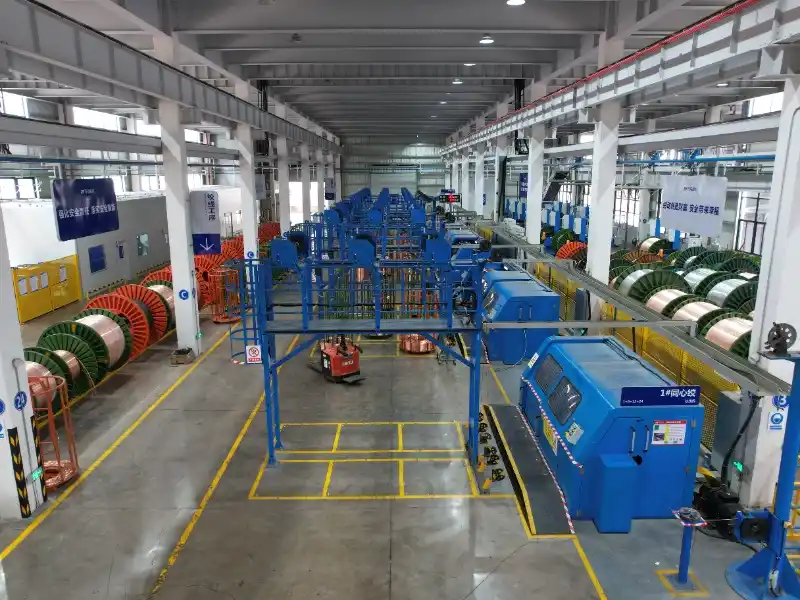

Hfsmarter has specialized in wire and cable machinery since 1985 and offers a range of equipment for different cable manufacturing processes. Its stranding machine range includes tubular, concentric, planetary, and other configurations for different production needs.
| Stranding Machine Type | Typical Application | Key Characteristic |
| Tubular Stranding Machine | Wire and conductor stranding | Continuous and efficient operation |
| Concentric Stranding Machine | Round conductors and stranded wires | Controlled concentric arrangement |
| Planetary Stranding Machine | Complex cable constructions | Flexible multi-element stranding |
1. Tubular Stranding Machine
A tubular stranding machine is commonly used for continuous wire and conductor stranding. Multiple wires are processed through a rotating tubular cage, allowing the machine to handle a range of standard stranding jobs.
For buyers, the basic machine structure is only the starting point. Conductor diameter, number of wires, reel size, required pitch, and production speed all affect the final machine configuration.
For production lines handling relatively straightforward conductor structures, a tubular machine can provide a good balance between output and operating efficiency.
2. Concentric Stranding Machine
A concentric stranding machine arranges wires around a central element to form a controlled concentric structure. This type of equipment is commonly used for stranded conductors and cable components where the position of each wire needs to remain consistent.
Tension control plays a major role here. If the tension between individual wires is uneven, the finished conductor may show irregular strand formation or dimensional variation.
When comparing machines, it is worth checking cage stability, tension control, pitch adjustment, drive synchronization, and take-up coordination instead of looking at speed alone.
3. Planetary Stranding Machine
A planetary stranding machine is designed for cable constructions in which multiple elements are arranged around a central core. Its configuration offers more flexibility when the cable structure becomes more complex.
The required machine setup depends on the actual product. Buyers may need to look at the number of cages, reel capacity, conductor dimensions, stranding pitch, line speed, and control functions.
For manufacturers producing several types of cables, a flexible machine configuration can be valuable. It allows the same production line to adapt to different cable structures without relying on a one-size-fits-all setup.
4. What Is the Difference Between These Stranding Machines?
The main difference is the machine structure and the type of cable construction it is designed to handle.
A tubular machine is commonly used for continuous wire and conductor stranding. A concentric machine focuses on keeping wires in a controlled arrangement around a central element. A planetary machine is better suited to more complex multi-element structures.
So, there is no single machine that works best for every cable manufacturer.
Before buying a cable stranding machine, it is useful to check:
- Cable and conductor structure
- Wire or conductor diameter
- Number of wires or elements
- Required stranding pitch
- Production speed
- Reel size and loading method
- Tension control
- Pulling and take-up configuration
- Control and automation functions
- Future production requirements
5. How Should You Choose the Right Cable Stranding Machine?
Start With the Cable Structure
The cable itself should come first when selecting equipment. Conductor shape, diameter, number of elements, and stranding arrangement determine what the machine needs to do.
A machine suitable for a simple conductor structure may not be able to provide the flexibility required for a cable with several elements around a central core.
Look at the Actual Production Requirements
Maximum machine speed can be useful as a reference, but it should not be the only factor in the decision.
A better choice is a machine that can run steadily at the speeds and conductor sizes used in your factory. Production stability, material range, output, and flexibility should all be considered together.
Pay Attention to Tension Control
Consistent tension helps keep the strand formation stable throughout production. This becomes even more important when different wire materials or sizes are processed together.
A reliable tension control system can also reduce the amount of manual adjustment operators need to make during a production run.
Check Drive Synchronization
The cage, pulling system, and take-up unit work as part of the same production line. Their speeds need to stay coordinated during operation.
Poor synchronization can affect strand formation and overall production stability. When evaluating a machine, buyers should check how the main drive components are controlled and synchronized.
Consider the Control System
Operators need to adjust production parameters regularly, especially when changing cable specifications. A practical control system should make settings such as stranding pitch, direction, and speed straightforward.
Clear controls can also shorten changeover time and make daily operation easier.
6. Why Does Machine Configuration Matter?
Two machines may both be classified as cable stranding equipment while having very different mechanical structures.
For example, a tubular machine may be enough for a continuous stranding process with a relatively simple cable structure. A planetary configuration may make more sense when several elements need to be arranged around a central core.
Choosing a more complicated machine does not automatically mean better production. The equipment should match the cable design, expected output, and range of products the factory plans to make.
7. What Should Buyers Check Before Purchase?
Machine performance is only part of the purchasing decision. Installation, commissioning, maintenance, and technical support can also affect the long-term performance of a production line.
Before placing an order, buyers should confirm several points.
Machine configuration:
Does the equipment match the conductor size, cable structure, reel dimensions, and required pitch?
Factory testing:
Does the supplier carry out equipment testing before delivery? Can customers review the test results or participate in the inspection?
Installation and commissioning:
Is technical assistance available during installation and initial operation?
Technical support:
Can the supplier provide remote troubleshooting when production problems occur?
Future production:
Can the machine handle new cable specifications that may be added later?
These questions are worth asking before the purchase rather than after the equipment arrives at the factory.
8. Why Manufacturer Experience Matters
Stranding equipment combines mechanical transmission, electrical control, tension management, and production synchronization. Experience in cable machinery can make a real difference when these systems need to work together.
Hfsmarter was established in 1958 and has focused on specialized wire and cable machinery since 1985. The company has developed more than 60 product types and serves customers in more than 70 countries and regions. Its technical center includes mechanical, electrical, and new product research institutes, supporting the development of equipment for different cable production requirements.
FAQ
1. What is a cable stranding machine used for?
A cable stranding machine combines multiple wires or conductor elements into a specific stranded structure for cable manufacturing.
2. What is the difference between a tubular and concentric stranding machine?
A tubular stranding machine uses a tubular cage arrangement and is commonly used for continuous stranding. A concentric stranding machine arranges wires around a central element in a controlled concentric structure.
3. When is a planetary stranding machine a good choice?
A planetary stranding machine is worth considering when several elements need to be arranged around a central core or when the production process requires more flexibility for complex cable structures.
4. What should I consider when buying a stranding machine?
Key factors include cable structure, conductor size, number of elements, stranding pitch, production speed, reel size, tension control, drive synchronization, control functions, technical support, and future production plans.
Conclusion
Tubular, concentric, and planetary stranding machines are designed for different production requirements. The right choice depends mainly on the cable structure, conductor specifications, production targets, and the flexibility required from the production line.
When comparing a cable stranding machine, buyers should look beyond the basic speed specification. Mechanical design, tension control, drive synchronization, control functions, testing, commissioning, and after-sales support can all affect daily production.
With decades of experience in wire and cable machinery, Hfsmarter provides different stranding machine configurations for cable manufacturers with different production requirements. The right equipment configuration can help manufacturers maintain stable production while leaving room for future product changes.